What is Static Electricity? Magic or Science?
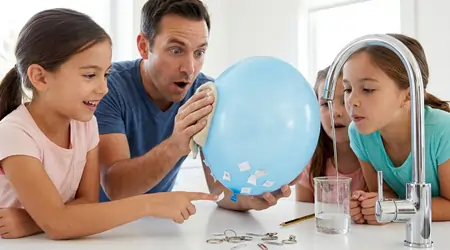
The phenomenon frequently seen in Instagram videos, such as a balloon rubbing against a wool sweater bending the water flowing from a tap or attracting small pieces of paper like a magnet, is actually the most concrete example of the concept of static electricity in our daily lives. When substances are in a neutral state, positive and negative charges are in balance. However, when you rub the balloon against your hair or a woolen fabric, a negative charge (electron) accumulates on the balloon's surface.
Materials Needed for the Experiment
1 standard balloon.
A woolen fabric, sweater, or your own hair.
For interaction: Small pieces of paper, a thin stream of tap water, an empty metal beverage can, or a salt-pepper mixture.
Step-by-Step Application
Charging Phase: Inflate the balloon and tie its opening. Then, rub the balloon rapidly against a woolen surface or your hair for about 30 seconds to electrically charge it.
Experiment with Water: Turn on the tap so that a very thin stream of water flows out. Bring the charged balloon close to the water (try not to touch it). You will see the water bend towards the balloon!
Paper and Metals: When you hold the balloon over small pieces of paper, you will notice that the papers bounce towards the balloon, and you can drag an empty metal can with the balloon without touching it.
How Does This Happen? (Scientific Explanation)
The electrons you collect when you rub the balloon disrupt the charge balance of neutral objects (water, paper, etc.) that you bring near it. For example, when you bring it close to water, the negative charges in the balloon attract the positive charges in the water molecules. This attractive force is so strong that it can move objects, defying gravity.
A little tip: This experiment is more difficult to do in humid air. Dry air allows the electrical charges to remain on the balloon for a longer time.