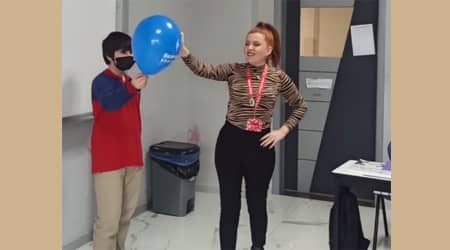
If you want to have a fun and educational time at home with your children, this "Magic Balloon Circle" event, which broke viewing records on social media, is just for you! Using just a hair dryer and a few balloons, you can turn your home into a science laboratory and teach your children the laws of aerodynamics while having fun.
So, how is this self-rotating balloon ring made in the air and what is the scientific secret behind it? Here is a fascinating experiment guide that you can do at home step by step!
Required Materials
To carry out this experiment, you need a few simple materials you already have at home:
- 6 to 8 colored balloons (inflated to medium size).
- A lightweight tape to secure balloons together or a method of tying balloons' knots together.
- One strong blowing hair dryer.
How to Do the Magic Balloon Circle Experiment?
The experiment is quite simple to set up, but the balance of the balloons is important.
Inflate the Balloons: Inflate all the balloons so that they are almost the same size, not too big, and tie their mouths.
Create a Ring: Tie the balloons together to form a circular ring (hoop) by lightly taping the knots or sides. Arranging the colors in a rainbow pattern will increase the visual feast.
Prepare the Machine: Set the hair dryer to cold air mode and highest speed (Hot air can pop balloons!).
Take Flight: Hold the balloon circle you prepared in the air and turn on the hair dryer to blow it from the bottom to the top. Gently release the balloon ring.
Result: You will see that the balloon circle magically hangs in the air and begins to rotate around itself!
How Does This "Magic" Happen? (Scientific Aspect of the Work)
You can explain to your children that this experiment is not magic, but purely physics. This situation is entirely related to Bernoulli Principle.
Bernoulli's Principle What is it?: As the speed of fluids (and air) increases, the pressure they create decreases.
The rapid airflow from the hair dryer creates a low-pressure area inside the balloons. The stagnant air outside the circle has higher pressure and forces the balloons to stay in this fast air current. As the airflow hits the edges of the balloons, the hoop remains in balance and begins to rotate under the influence of aerodynamic forces. This is exactly the basic logic that makes planes fly!
What are the benefits of this activity for children?
- Awakens Scientific Curiosity: Children's questions like "How does this stay in the air?" It creates curiosity about the laws of physics at an early age by making people ask questions.
- Visual and Sensory Development: The movement and rotation of colorful balloons in the air improves the focusing and tracking skills of especially young children.
- It is a Great Family Activity: Since it is extremely enjoyable to make and watch, it allows all family members to have a fun time together.
Result: Fun Science at Your Home!
The flying balloon circle experiment, one of the most popular trends on social media, is a great opportunity to make children love science. Be sure to add this experiment to your list as a weekend activity.