We Discover the Mysterious World of Magnets!
Science for children is not just information read in books; It should be a process that is touched, felt and observed. Today, we are taking a deep dive into magnetization with little scientists.
Required Materials
- One strong magnet (bar or ring magnet if possible).
- Attracted Objects: Paper clip, metal spoon, coin, screw.
- Objects that cannot be pulled: Plastic toys, wooden blocks, pieces of fabric, paper.
- A tray or "Magnet Station" area.
Implementation of the Experiment
- Guessing: Arrange the objects on the table before starting the activity. Ask your child, "Which items do you think this magnet can catch?" ask.
- Experiment: Give the magnet to the child's hand and ask him to bring it closer to each object.
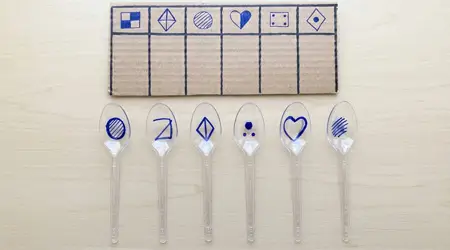
- Grouping: Create a "Science Table" by separating what the magnet attracts to one side and what it does not attract to the other side.
- Questioning: "Why did he pull the metal spoon but not the plastic spoon?" Brainstorm the question.
What Does This Activity Bring to the Child?
- Observation Ability: They learn to distinguish the properties of substances.
- Cause-Effect Relationship: They understand the physical effects of an invisible force (magnetism).
- Fine Motor Skills: Hand-eye coordination develops while sorting objects and directing the magnet.
Scientific Explanation:
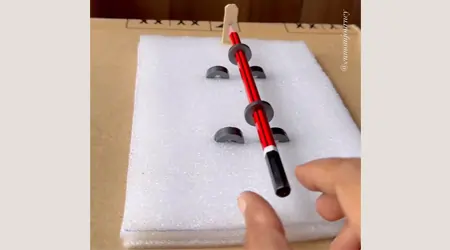
This mechanism is called Maglev. Applications of Maglev in various engineering sciences include Transportation engineering (magnetically levitating trains, flying cars).
In the vertical direction, the pen is subjected to the force of gravity, with the front magnets exerting a downward force and the rear magnets exerting an upward force. It is the delicate interplay between all these different forces that allows the pencil to remain stable and hover in the air without any support.