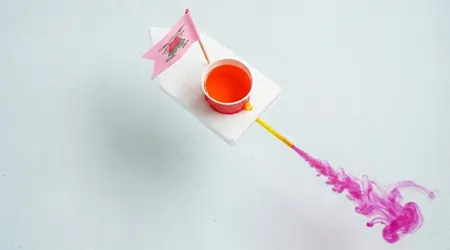
A great STEM project that will increase children's curiosity in science: Straw and colorful floating boat experiment! Required materials, step-by-step preparation and scientific explanation.
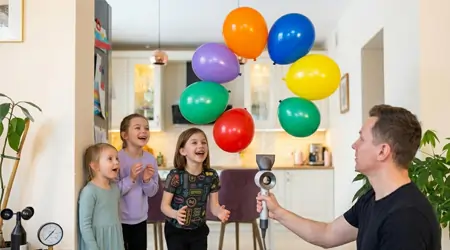
Make your children love science with materials at home! Rules and procedure of the balloon circle experiment that rotates in the air using a hair dryer and balloons.
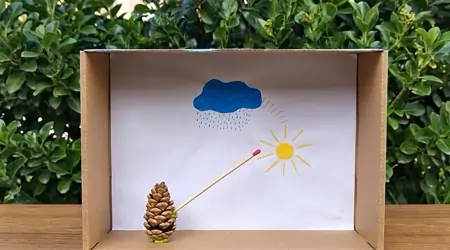
Make your own natural hygrometer using the moisture-changing structure of a pine cone! An educational and entertaining "weather forecast with a cone" experiment guide that can be done at home for children.
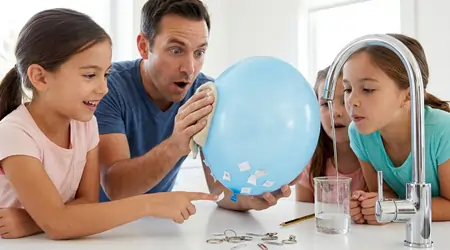
Did you know you can change the flow of water or make paper float in the air with a balloon? A fun experiment guide where we'll explore static electricity and electrostatic attraction!
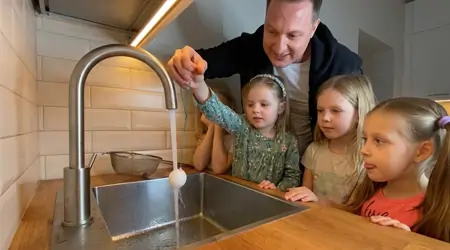
A fun and educational science experiment you can do at home with children: A ping-pong ball suspended in the air in a stream of water! Learn Bernoulli's Principle in simple terms and try this magical experiment right away.
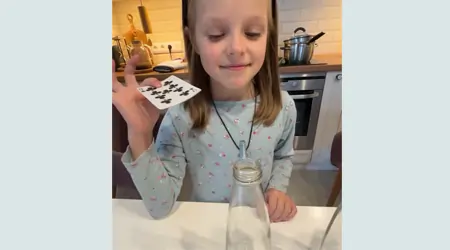
This content; It describes an interactive experiment performed with a bottle, a card and a small object that teaches children the rules of physics (inertia) through play. It offers tips on how to diversify the game with different materials such as batteries, pencils or nuts.
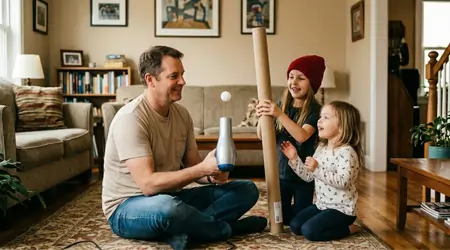
Discover science with simple ingredients at home! Explain Bernouilli's Principle to your children in a fun way, using a hair dryer and a ping-pong ball. Step by step experiment guide.
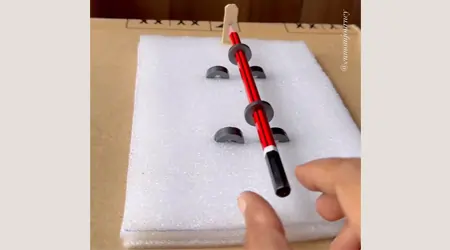
This activity allows children to learn through experience which substances are attracted to the magnet and which are not. This "magnet hunt" triggers curiosity and teaches basic scientific concepts through play.
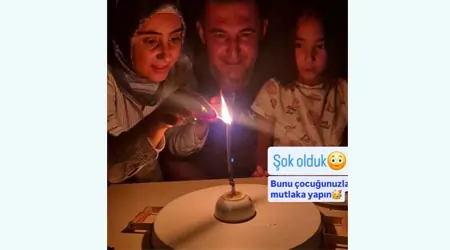
A fun science experiment that shows that the smoke released after the candle goes out can re-light the candle when it meets the fire again. This activity, which can be done with children, enables learning by observing the behavior of combustion and gases.
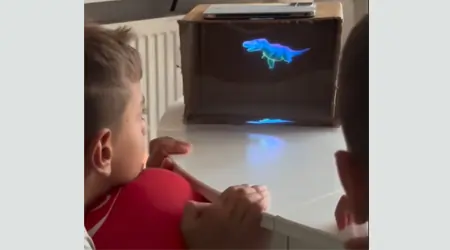
We can carry out a science activity that is both fun and educational for children with this simple mechanism that we will prepare using cardboard and transparent paper.
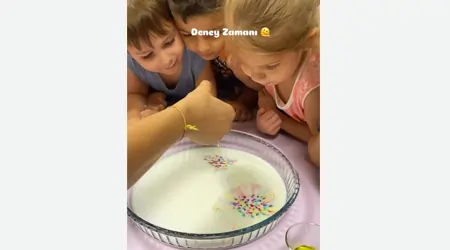
Today, we carried out a color feast experiment with our children that is both fun and educational. In this enjoyable children's activity, we drew various shapes on napkins and made dots with colored felt-tip pens. Then, thanks to the detergent we added, we observed how the colors mixed together and became colorful.
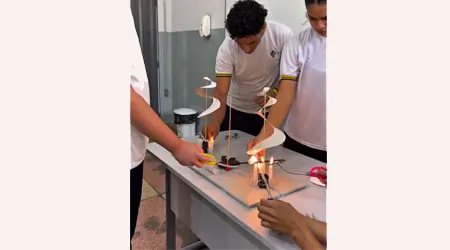
Why does heat rise? Why does hot air move? This fun experiment allows children to feel science firsthand by observing heat and air currents. This experiment, which you can easily do at home or in the classroom with a candle and a small spiral of paper, is both instructive and fascinating!
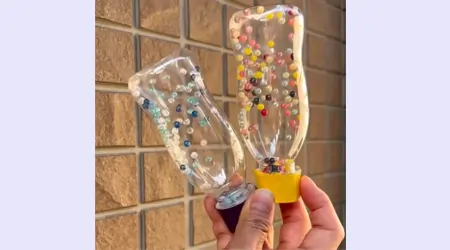
In this activity, we're experimenting with static electricity using a plastic bottle and some plastic beads. The beads shouldn't be too heavy; they should be light, like the beads we use to make bracelets, and the inside of the plastic bottle should be dry.
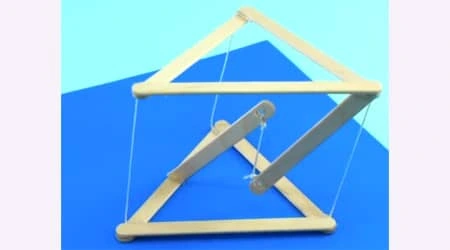
A magical structure that defies gravity: What is an anti-gravity table? A fun physics experiment you can do at home using the Tensegrity principle.
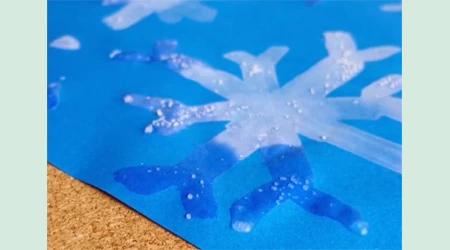
Let's reveal a beautiful salt crystal in this very fun art and science activity. Let's try to do this fascinating activity with the help of a parent with the help of colored paper, hot water and salt.
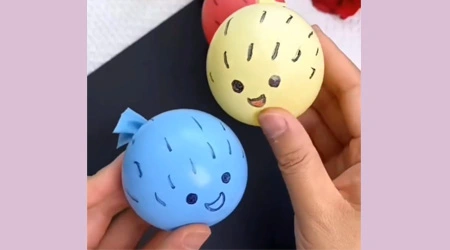
A balloon fish activity that you can easily make at home with children using vinegar, baking soda and balloons! Thanks to the fun experiment, children both learn and have a fun time.